The 3-Step Marketing System: Why Simple Wins When Everything Else Fails
If you searched for a beginner marketing system that actually works, this is it. The 3-Step System: Capture → Follow-Up → Offer works because it matches how real people decide to buy. Most beginners do not fail because they are lazy. They fail because they try to sell too soon.
That mistake kills trust fast.
It also burns good traffic.
And if you have tried before, you know the feeling.
You post.
You tweak.
You buy tools.
You watch videos.
Then nothing happens.
No leads.
No sales.
No proof that any of it works.
That is why this 3-step system matters.
Why beginners fail when they sell too soon
A stranger sees your link for the first time.
You ask them to buy right away.
Why would they?
They do not know you yet.
They do not trust your promise.
They do not know if your offer is real.
So they leave.
This is not bad luck.
It is basic human behavior.
Think about real life.
If a stranger walked up and said, “Give me money,” you would step back.
But if that same person gave you something useful first, things change.
Maybe they solve a small problem.
Maybe they explain something clearly.
Maybe they follow up with something that helps again.
Now you listen.
Online business works the same way.
People rarely buy on first contact.
They buy after enough trust builds.
That is why the 3-step system works.
It matches how people already make decisions.
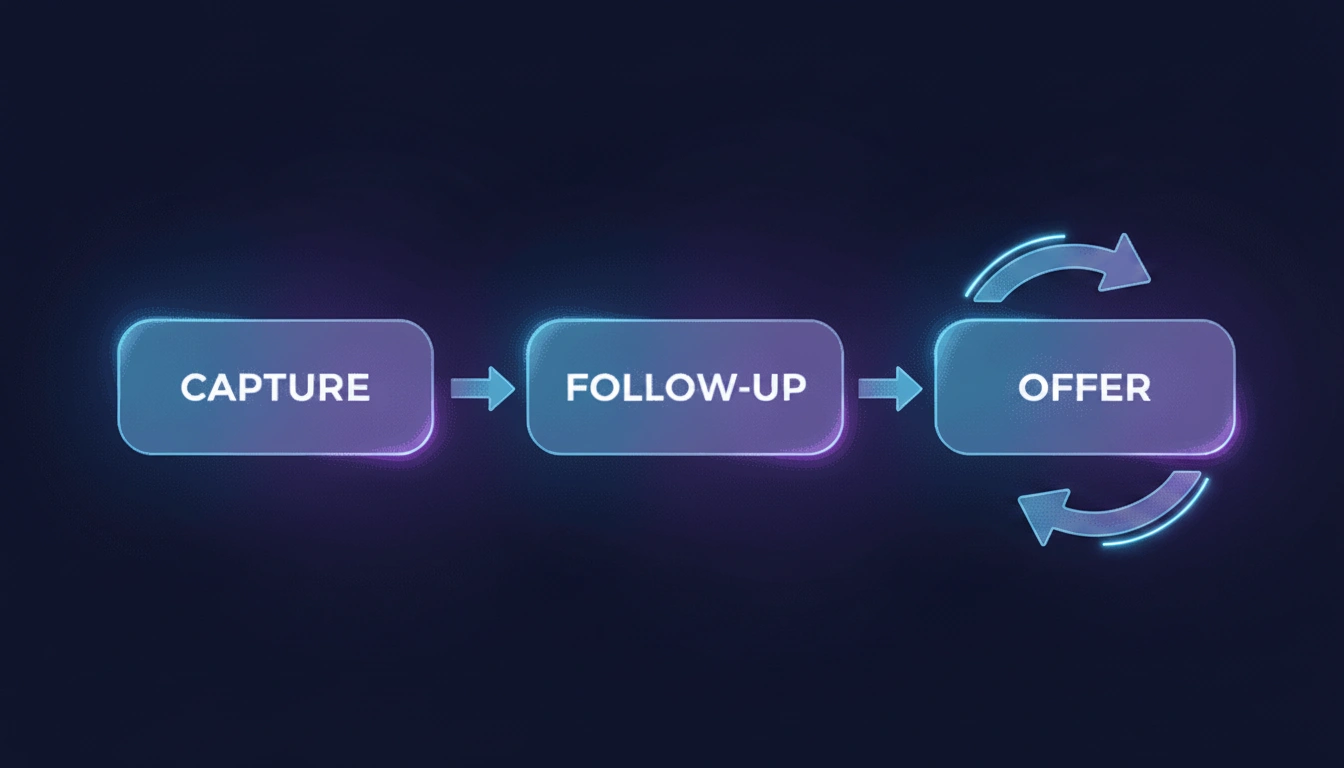
Here is the system in plain English:
- Capture attention and contact.
- Follow up with useful value and proof.
- Offer the next clear step.
That order matters.
If you change the order, results drop.
A lot of beginners do this instead:
- Pitch
- Pitch again
- Wonder why nobody buys
That is not a system.
That is pressure.
Pressure does not build trust.
Trust builds sales.
This is the part critics often miss.
They judge the system by bad versions of it.
They saw spammy pages.
They saw fake countdown timers.
They saw weak follow-up that said nothing.
Then they blamed the whole idea.
That is like eating bad pizza once and saying pizza never works.
The problem was not the structure.
The problem was poor execution.
A good 3-step system does not trick people.
It guides them.
It respects timing.
It answers doubt before asking for money.
That is why it outperforms random posting and hard selling.
I have seen this play out in real campaigns.
Pages that asked for the sale right away got clicks but weak results.
Pages that captured interest first gave the follow-up a chance to work.
That pattern repeats because buyer psychology does not change.
How lead capture works in the 3-Step System
Let’s kill a myth fast.
Capture does not mean trapping people.
It means getting permission to keep the conversation going.
That could be:
- An email sign-up
- A bonus claim form
- A waitlist form
- A free guide request
- A webinar seat request
The key is simple.
You do not ask for a huge commitment first.
You ask for a small yes.
That small yes matters.
It changes the relationship.
Before capture, the person is just passing by.
After capture, they raised their hand.
That means interest is real.
This is huge for beginners.
Why?
Because most traffic leaves and never returns.
If you do not capture attention and contact, you keep starting from zero.
Every day feels like groundhog day.
More posts.
More effort.
No growing asset.
But a lead is an asset.
A visitor is a moment.
A lead is a chance.
That difference can change your business.
Picture two beginners.
Both get 100 visitors.
Beginner one sends all 100 straight to a sales page.
Maybe one buys.
Maybe none buy.
The other 99 disappear.
Beginner two uses capture first.
Let’s say 20 people join a list, waitlist, or form.
Now maybe only one buys today.
But 19 more can hear from them again.
That is not a small difference.
That is the whole game.
Critics often say, “If the offer is good, people should buy now.”
That sounds tough and smart.
It is also wrong.
Even strong offers need context.
People need time.
They need proof.
They need reminders.
They need to see that you understand their problem.
Capture creates that chance.
And there is another truth critics ignore.
Capture protects your effort.
Every post, video, ad, or message costs something.
Maybe money.
Maybe time.
Maybe both.
If that effort brings a click but no capture, the value dies fast.
If it brings a lead, the value keeps working later.
That is why smart beginners build capture early.
Not because they love forms.
Because they hate waste.
In email marketing, landing page, and funnel strategy, this is the first real win.
You stop treating traffic like a one-shot event.
You start building a system that keeps working after the click.
Why follow-up builds trust and boosts conversions
This is where most sales really happen.
Not at the click.
Not at the opt-in.
Not at the headline.
In the follow-up.
Follow-up is the bridge between interest and action.
Without it, most leads go cold.
With it, average leads turn warm.
This is also where skeptics roll their eyes.
They hear “follow-up” and think spam.
Fair.
A lot of follow-up is awful.
It is lazy.
It is pushy.
It repeats the same pitch.
That is not real follow-up.
Real follow-up helps people move from doubt to clarity.
That means your follow-up should do at least one of these:
- Solve a small problem
- Answer a common objection
- Show proof
- Share a clear example
- Tell them what to do next
Let’s use a simple example.
Say you help beginners start affiliate marketing.
Bad follow-up says:
“Hey, buy now before the deal ends.”
Good follow-up says:
“Here is why most beginners get clicks but no leads.”
See the difference?
One pushes.
The other helps.
One feels needy.
The other feels useful.
People remember useful.
This matters even more if your reader got burned before.
That person does not need more hype.
They need a reason to believe again.
Follow-up gives you room to earn that belief.
You do that by being consistent.
You show up.
You say clear things.
You prove you understand the pain.
You give small wins before asking for the sale.
That process builds trust faster than any fancy design ever will.
And yes, there is logic behind this.
People buy when three things line up:
- They want the result.
- They believe your path can help.
- They feel safe taking the next step.
Follow-up helps all three.
It keeps the desire alive.
It makes your method easier to trust.
It lowers fear.
No magic here.
Just decision psychology.
This lines up with a well-known point from marketing expert Seth Godin: people want to be led, not coerced. Good follow-up does exactly that. It gives people useful reasons to keep moving instead of pushing them into a corner.
Also, follow-up fights a basic problem: distraction.
People get busy.
They forget.
They open tabs and never come back.
They mean to act later.
Then life gets in the way.
That does not mean they were not interested.
It means they are human.
Follow-up brings them back.
This is why “no response” does not always mean “not interested.”
Sometimes it means:
- Wrong time
- Too many tabs
- Still unsure
- Need more proof
- Need one more nudge
That one truth alone should change how you market.
How to make an offer after trust is built
Now we get to the sale.
This is where most beginners want to start.
But now you can see why that is a mistake.
An offer lands better after capture and follow-up.
Why?
Because now it shows up in the right context.
The reader knows who you are.
They understand the problem better.
They have seen proof or value.
Now the offer feels like help.
Not pressure.
That is the hidden power of this system.
It does not just raise conversions.
It changes how the offer feels.
And feeling matters.
A lot.
A cold offer says, “Trust me.”
A warm offer says, “You have seen enough to decide.”
That second one is stronger.
The best offers solve a next problem.
Not every problem.
Just the next one.
For example:
- Want more leads? Here is the capture tool.
- Want better trust? Here is the follow-up plan.
- Want faster sales? Here is the offer script.
That kind of offer feels clean.
It feels useful.
It feels buyable.
Critics love to say, “Just make a better offer.”
Sure.
You should.
But even a strong offer needs delivery.
A steak on a dirty plate still loses.
Context shapes response.
Timing shapes response too.
Trust shapes response most of all.
The 3-step system gives your offer the best chance to win.
And here is the emotional truth true believers know.
The system works because it respects the buyer.
It does not rush them.
It does not bully them.
It says, “Let me earn your attention first.”
That is rare online.
And rare feels honest.
Honest stands out.
That is why this system can feel slower at first.
But it often wins bigger over time.
Hard selling chases quick wins.
This system builds momentum.
Momentum compounds.
Each lead can become a buyer later.
Each follow-up can wake up old interest.
Each offer can improve with feedback.
That is how small creators grow.
Not with one perfect viral moment.
With a simple system they can repeat.
A study from Invesp found that acquiring a new customer can cost five times more than retaining an existing one.
That matters here. Follow-up makes your traffic more valuable because it gives interested people more than one chance to buy.
Why the 3-Step System beats random marketing tactics
Random tactics feel exciting.
One day it is reels.
Next day it is AI content.
Then it is chat bots.
Then paid ads.
Then some “secret” funnel trick.
Most beginners stay stuck because they keep changing tools.
They never lock in the path.
The 3-step system gives you that path.
No matter the platform, the logic stays the same.
On YouTube?
Capture the viewer.
Follow up with value.
Make the offer.
On a blog?
Capture the reader.
Follow up with proof.
Make the offer.
On social media?
Capture interest.
Follow up in messages or email.
Make the offer.
The channel can change.
Human behavior does not.
That is why this system lasts.
It is not based on trends.
It is based on people.
And people still need trust before action.
Always.
If you are skeptical, ask yourself one question.
What is the better alternative?
Posting and hoping?
Selling on first touch?
Waiting for the perfect tool?
Those paths fail every day.
Not because people are dumb.
Because they have no structure.
This system gives structure.
Structure gives feedback.
Feedback gives improvement.
Improvement gives results.
That chain matters.
Without a system, you cannot fix anything.
If sales are low, what broke?
The traffic?
The page?
The offer?
You do not know.
But with Capture → Follow-Up → Offer, you can see the gap.
- Low leads? Fix capture.
- Leads but no trust? Fix follow-up.
- Trust but no sales? Fix offer.
Now you can improve the right piece.
That alone makes this system powerful.
It turns guessing into problem solving.
And problem solving beats hope every time.
Ready to See a Beginner-Friendly System in Action?
If this post made something click, do not leave with just the idea. The smartest next step is to look at a real system built around the same simple path: capture attention, follow up, and make a clear offer.
Check Out the Profit Hub SystemNo fluff. No endless guessing. Just a simple next step you can look at and judge for yourself.
Why Capture → Follow-Up → Offer matches real buyer behavior
You do not need blind faith here.
You already live this pattern.
Think about how you choose a gym.
Or a plumber.
Or a phone plan.
First, something gets your attention.
Then you look closer.
You read reviews.
You compare.
You think.
Then you buy.
That is capture, follow-up, and offer.
It is already how trust works.
The system did not invent human behavior.
It simply lines up with it.
That is why people who truly understand marketing keep coming back to basics.
Not because basics are boring.
Because basics work.
Fancy tactics can add lift later.
But basics carry the load.
If you skip them, the whole thing shakes.
Nielsen has long reported that people trust recommendations and real proof far more than brand claims alone. That is exactly why this system works. It gives people enough contact, context, and confidence to act.
Stop looking for a shortcut that skips trust.
Use the 3-Step System: Capture → Follow-Up → Offer and build the kind of beginner marketing system that turns traffic into leads and leads into buyers.
Start with one capture point.
Add one useful follow-up message.
Then make one clear offer.
Do that next.
🚀 Don’t Stop Here — Read This Next
3 Ways to Start Making Money Online Today (No Hype)
If you’re tired of guessing, this shows you simple ways to get your first real result.
→ Read this nextThe Day Affiliate Marketing Broke Him
See exactly what went wrong—and why most people never talk about it.
→ Read the full story